
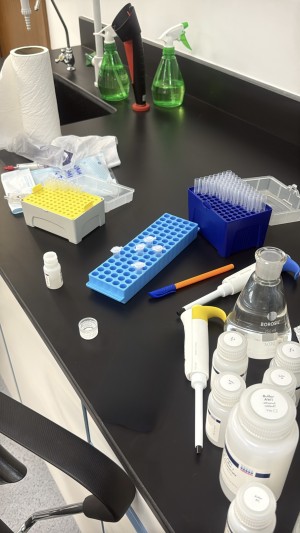
Environmental DNA (eDNA) Extraction from Water Samples at Fujairah Research Centre
The Fujairah Research Centre (FRC) is one of the leading scientific research institutions in the United Arab Emirates. The centre supports environmental, marine, and biotechnology research through advanced laboratory facilities and modern scientific techniques. During my training at the Fujairah Research Centre, I was introduced to environmental DNA (eDNA) analysis, a powerful molecular tool used to monitor biodiversity and detect species in aquatic environments without directly capturing organisms.
This blog discusses the process of extracting DNA from environmental water samples and explains the importance of this technique in environmental monitoring and conservation.
What is Environmental DNA (eDNA)?
Environmental DNA, commonly known as eDNA, refers to genetic material released by organisms into their environment. Fish, marine mammals, plants, microorganisms, and other organisms continuously shed DNA through skin cells, mucus, waste products, scales, and other biological materials.
Scientists can collect water samples and analyze the DNA present in them to identify which organisms live in a particular ecosystem. This method is non-invasive, efficient, and highly sensitive compared to traditional biodiversity surveys.
Importance of eDNA Analysis
Environmental DNA technology has become increasingly important for environmental research because it offers several advantages:
• Detects rare and endangered species.
• Monitors biodiversity without disturbing wildlife.
• Supports conservation and ecosystem management.
• Provides rapid and cost-effective environmental assessments.
• Helps identify invasive species before they become established.
These advantages make eDNA an essential tool for marine and freshwater research programs worldwide.
Collection of Water Samples
The first stage of the study involved collecting water samples from the environment. Sterile sampling bottles were used to prevent contamination. The collected water was transported to the laboratory under controlled conditions to maintain sample quality.
Once the samples arrived at the laboratory, they were processed as quickly as possible to minimize DNA degradation.
Filtration Process
Before DNA extraction, the water samples were filtered using specialized membrane filters. The purpose of filtration is to capture suspended particles containing DNA fragments released by organisms in the water.
During this step:
1. Water passes through a fine membrane filter.
2. DNA-containing particles remain trapped on the filter surface.
3. The filter becomes the primary source of genetic material for extraction.
The filters were then carefully stored and prepared for laboratory analysis.
DNA Extraction Procedure
The next stage involved extracting DNA from the collected filters using a DNA Extraction Kit. DNA extraction is one of the most important laboratory procedures because it isolates genetic material from other cellular components.
PCR Amplification and Primers
After extraction, the DNA concentration and quality are assessed. The extracted DNA can then be amplified using Polymerase Chain Reaction (PCR).
PCR requires specific primers that target particular genetic regions. Depending on the research objectives, scientists may use primers designed for:
• Fish species identification.
• Marine biodiversity assessment.
• Microbial community analysis.
• Environmental monitoring studies.
The selected primers amplify specific DNA fragments, allowing researchers to identify organisms present in the water sample.
Applications in Environmental Research
Environmental DNA analysis has numerous applications in modern environmental science:
• Monitoring marine ecosystems.
• Assessing freshwater biodiversity.
• Detecting endangered species.
• Tracking invasive organisms.
• Supporting conservation programs.
• Evaluating ecosystem health.
At the Fujairah Research Centre, these techniques contribute to scientific research and provide valuable information for environmental management and biodiversity conservation in the UAE.
My experience at the Fujairah Research Centre provided valuable insight into modern molecular biology techniques used in environmental research. Environmental DNA extraction from water samples is a powerful scientific method that allows researchers to study biodiversity efficiently and accurately.
From sample collection and filtration to DNA extraction and PCR analysis, each step plays a critical role in generating reliable data. As environmental challenges continue to grow, eDNA technology will remain an important tool for protecting ecosystems and supporting sustainable environmental management.
The Fujairah Research Centre continues to play an important role in advancing scientific research and promoting innovative solutions for environmental conservation in the United Arab Emirates.