
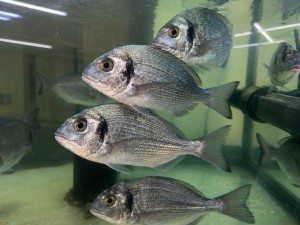
Sustainable Seabream Aquaculture in Arid Regions Using Local Biomaterial Feed Additives
To date, arid regions encounter significant challenges due to the extreme weather conditions that strongly restrain agricultural activities, therefore, negatively affect food security balance. Furthermore, the current regional issue has resulted in a net increase of costs associated with importations. These impacts may be significantly higher when allocated to goods imports in the arid regions, where food importation is already estimated at 80%. Limited natural resources is one of the biggest challenges that face extreme zones. Therefore, implementations of fish farms could be associated with more financial investments compared with other geographical regions. With this regard, selecting and testing local biomaterial as additive feed for seabream could be one of the alternative ways to increase food security and sustainable fish farming systems in the extreme zones. Sea bream is well-known for its higher content in protein, essential minerals and vitamins that can support human health. However, farming systems of sea bream is relatively limited under arid regions due to the non-availability of local feed producers, which could boot this activity. Therefore, strategically integrating bioactive compounds resulting from plant could support apicultural activities under extreme zones. Moreover, integrating sea bream fish production under extreme milieus could also support the local economy while offering more jobs opportunity.